
Market value indication
For a first approximate expert orientation based on existing documents and market data.
Learn more →
A flat is only as good as the building it is in. That is why I look not only at the flat itself, but also at the common property and the legal arrangements of the owners’ association.
Jens Krüger · Let’s talk: +49 172 868 5666
With a flat, the valuation does not end at the front door. Besides the location, size, layout, fittings and condition of the flat, the building, the common property and the legal structure of the ownership can also affect value. When valuing a flat, I therefore also take the common property and the documents of the owners’ association into account.
I value owner-occupied and let flats, apartments and – taking their particular use into account – holiday flats.
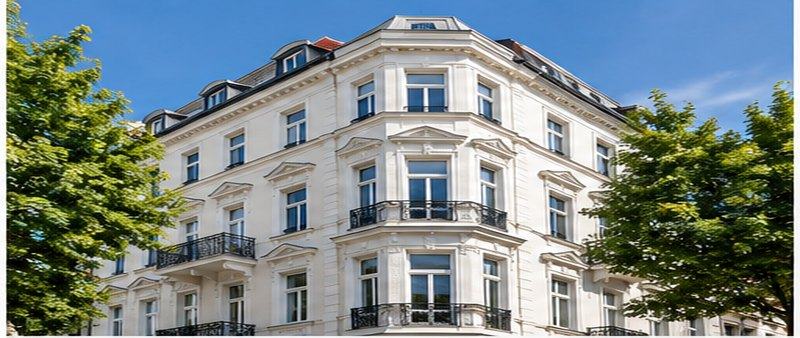
Two flats with the same floor area in the same district can have markedly different market values. The floor level, orientation, natural light, balcony or terrace, lift, parking space, layout, state of modernisation and the specific micro-location can matter just as much as the condition and fittings of the building.
In addition, with flat ownership the individual flat is legally and economically bound into a community of owners. For a proper valuation, it is therefore generally not enough simply to multiply a price per square metre by the floor area.
Under German law, flat ownership (Wohnungseigentum) consists of individual ownership of the flat (Sondereigentum) combined with the associated co-ownership share in the common property. In addition to the flat itself, the declaration of division, the division plan and the agreements applying to the specific unit may therefore be important for the valuation.
The allocation of parking spaces, garden or terrace areas and other rights of use can also affect value. What matters is which rights are actually allocated to the specific unit.
The position of a flat within the building can have a considerable effect on how marketable it is. Ground floor, raised ground floor, upper floors or attic floor may be assessed differently depending on the building and the market. Orientation, view, natural light, balcony or terrace, lift and step-free access can also be relevant.
In larger developments, the front or rear building, a street or courtyard position and the specific position within the complex can also play a role. For example, an upper floor without a lift has to be assessed differently from the same floor with a lift and a good view.
Floor area, number of rooms and layout are among the main characteristics of a flat. Awkward walk-through rooms, poorly usable areas or unusual layouts can affect marketability differently from a flat with a modern layout.
For attic flats, balconies and terraces, the area figures used may need particular attention. If there are doubts about existing figures, a separate floor area measurement may make sense.
A flat with a high-quality refurbishment in a building with considerable repair needs has to be assessed differently from a comparable flat in a building that is also well maintained. Where relevant to the valuation and apparent from the inspection or the documents, aspects of the common property that affect value are therefore also taken into account.
Particularly helpful are the declaration of division and division plan, the budget and service charge (Hausgeld), information on the maintenance reserve, annual accounts and minutes or resolutions on major works or special levies. The expert valuation does not replace a full legal or technical review of the owners’ association.
Major repair works or special levies that have already been resolved, in particular, can be economically relevant for a buyer and should not be ignored in the valuation or when assessing a purchase price.
A let flat may be assessed differently in the market from a comparable flat with vacant possession. The lease, rent level, rent development and the specific occupancy situation can therefore be relevant to the valuation. However, a general statement that a let flat is always worth less would not be appropriate.
Parking spaces, garages, cellars or storage rooms and allocated garden or terrace areas can also affect value. What matters for the valuation is how they are legally allocated to the unit and how much demand there is for them in the market.
For flats, the sales comparison approach can be an important basis if suitable comparable prices, comparison factors or other reliable property market data are available. What matters, however, is whether the data used is genuinely comparable in terms of location, size, building type, condition and other characteristics affecting value.
Depending on the property, the task and the data available, other methods or their results may be used in addition. Here too, the valuation method depends on the property and the property market – not just on the label “flat”.
The principles of model consistency and the use of market data are explained in the guide ImmoWertV & ImmoWertA.
For a first approximate expert orientation based on existing documents and market data.
Learn more →For a clearly derived market value with a site inspection and deliberately reduced documentation.
Learn more →For a comprehensive investigation, derivation and documentation of the market value.
Learn more →For a personal viewing and expert assessment before buying a flat.
Learn more →When existing living and usable areas are to be checked or recalculated.
Learn more →Depending on the instruction, the following are particularly helpful:
Not all documents need to be complete at the first enquiry. Which documents are actually needed depends on the property and the instruction.
I carry out site inspections from my offices in Dresden, Berlin and Lemgo.
Briefly describe the flat, its location and the reason for the valuation. We will clarify in advance which type of valuation fits, and you will receive a specific price before placing the instruction.