
Short-form valuation
A valuation with more compact documentation is only possible if the property, the data basis and the reason for the valuation professionally permit a reduced depth of work. The scope and fee are agreed individually.
Learn more →
Two paper mills, a chocolate factory, a tobacco factory.
With special-purpose property, no standard formula applies. We clarify the property, its use and the purpose of the valuation, and you then receive a specifically calculated quotation.
Jens Krüger · Let’s talk: +49 172 868 5666
Industrial and special-purpose properties often differ markedly from conventional residential or commercial property. Production buildings, larger warehouse and logistics sites or properties built for a specific operation are often tailored to particular workflows, technical requirements or uses.
What matters for the valuation is how the land and buildings can be used, let or sold in the market – and how large the pool of potential occupiers and buyers actually is.
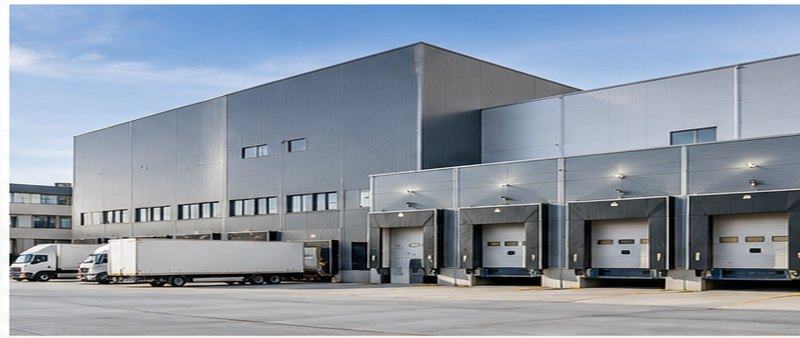
Factors to consider include plot size and shape, the use permitted under planning law, servicing, road and, where applicable, rail connections, access and delivery options, manoeuvring and open areas, parking and options for expansion or subdivision.
On large industrial sites in particular, not every part of the plot contributes to value in the same economic way. Built-up core areas, circulation areas, reserve land or any parts of the plot that can be used or separated independently may have to be considered differently. Simply multiplying the total area by the standard land value therefore often falls short. More on this in the guide standard land value & land value.
Factors affecting value can include clear height and spans, floor construction, number and type of doors, loading ramps and level access, crane installations, natural light, heating, office and staff areas, fire safety and use concept and other technical features of the building.
Such features are recorded and taken into account insofar as they are relevant to the property valuation and visible during the inspection or documented in the records. This does not include a technical inspection of installations or a full technical building survey.
A building constructed specifically for a particular production process may work excellently for the current occupier and yet attract only limited demand in the general property market. It is therefore necessary to examine how large the pool of potential occupiers and buyers would be if the current use ceased.
Adaptability, building geometry, technical equipment, servicing, the plot situation, permitted use under planning law and possible alternative uses are all interlinked.
Operational benefit and property value are not necessarily the same. Operating equipment, machinery or production plant must be distinguished from the property being valued, unless they are part of the specific valuation task.
Special-purpose properties are often characterised by a particularly close link between building and use, and by a limited market of comparable properties. Depending on the task, they can include special operational property, specially designed warehouse or production buildings or other property with limited potential for alternative use.
Which valuation methodology is appropriate therefore cannot be derived from the name of the property alone. What matters are the specific use, marketability and the data available.
From my valuation practice: the properties I have valued include two paper mills, a chocolate factory and a tobacco factory, as well as production and warehouse halls. With such properties, value depends less on the size of the buildings than on whether the layout, clear heights, load-bearing capacity and access would also suit another occupier – and what a conversion would cost.
An owner-occupied industrial property has no rent actually agreed. For an income-based assessment, however, the question of which market rent could be achieved sustainably for the property or its different areas may still be relevant.
For let properties, on the other hand, the lease, lease term, rent level, occupier structure and special property-specific lease terms can be of economic significance. These are taken into account from a valuation perspective; this does not replace a legal review of the lease.
For industrial and special-purpose property, the income, cost and, where applicable, sales comparison approaches can have different weight depending on the property and the data available. With heterogeneous or highly specialised properties in particular, it may be necessary to cross-check several pieces of information and method results against each other.
The property market data used must fit the valuation model and the specific property. The principles of model consistency are explained in the guide ImmoWertV & ImmoWertA.
On sites with a long history of industrial use, indications of contamination or harmful soil changes can be relevant to the valuation. However, the property valuation does not include an environmental investigation of its own. Existing information, reports or official records are taken into account within the scope of the respective task.
With large operational properties, hall, production, warehouse, office, staff and other usable areas may have to be recorded or checked for plausibility separately. Which definition of floor area is needed depends on the property and the instruction. If required, a separate floor area measurement can be agreed.
A valuation with more compact documentation is only possible if the property, the data basis and the reason for the valuation professionally permit a reduced depth of work. The scope and fee are agreed individually.
Learn more →For a comprehensive investigation, derivation and documentation of the market value. The scope and fee are calculated individually.
Learn more →For complex operational properties, the scope of a pre-acquisition assessment is defined individually according to the property and the question – with a view to purchase price, income, condition and investment needs.
View pre-acquisition assessment →When existing hall, production, warehouse, office or other usable areas are to be checked or recalculated.
Learn more →When a suitable earlier valuation already exists and specific valuation inputs are to be traced or – where professionally possible – updated.
Learn more →Depending on the property and the instruction, the following are particularly helpful:
Which documents are needed in the specific case depends heavily on the property, its use and the instruction. Not everything needs to be complete at the first enquiry.
I carry out site inspections from my offices in Dresden, Berlin and Lemgo – and, for commercial and industrial property, further afield too.
Briefly describe the site, use, building structure and reason for the valuation. After reviewing the task, you will receive an individual quotation before placing the instruction.